


Ever looked at your sunscreen bottle and felt totally confused by the ingredients list? We often wonder why some products often leave a white cast or sting us and the answer lies in the constituent sunscreen ingredients. Understanding what’s inside your SPF can help you choose the right product for your skin type, avoid irritation, and get the protection you truly need.
In this guide, we’ll decode common sunscreen ingredients like zinc oxide, titanium dioxide, avobenzone, and octocrylene- explaining what each does, how it works, and who should use it. We’ll explore supporting ingredients like antioxidants and pigmentation-correcting compounds that enhance your sunscreen’s effectiveness.
Why the Ingredients in Your Sunscreen Matter?
It is important to choose a sunscreen by looking at the SPF number as your sunscreen’s real performance depends on what filters it uses and how they work on your skin. Are they physical or chemical? Do they protect against UVA, UVB, or both?
Its ingredients should be gentle on the sensitive skin and safe for daily use? Each ingredient plays a specific role and choosing the wrong one could mean uneven protection or unwanted side effects.
Mineral vs Chemical: The Two Broad Categories
Sunscreens typically fall into two categories:
- Mineral (Physical) Filters: These sit on the skin’s surface and reflect UV rays. Common mineral ingredients include zinc oxide and titanium dioxide.
- Chemical Filters: These absorb UV rays and convert them into harmless heat. Common ones include avobenzone and octocrylene.
Choosing between mineral and chemical sunscreen is about which suits your skin and your needs in the best way possible.
Key Sunscreen Ingredients Explained
Zinc Oxide
- Type: Mineral filter
- It reflects UVA and UVB rays
- Best for: Sensitive skin, acne-prone skin, pigmentation issues
- Pros: Broad-spectrum, non-irritating, reef-safe
- Cons: May leave a white cast (improving with newer formulas)
Zinc oxide is one of the only ingredients considered safe and effective by the FDA. So, it’s the main ingredient in zinc oxide sunscreen formulations and is often found in baby sunscreens and products for reactive skin.
Titanium Dioxide
- Type: Mineral filter
- How it works: Reflects UVB and some UVA rays
- Best for: Fair skin tones, sensitive skin
- Pros: Non-irritating, stable under sunlight
- Cons: It may offer slightly less UVA protection
A zinc oxide and titanium dioxide sunscreen provides excellent mineral-based, broad-spectrum protection.
Avobenzone
- Type: Chemical filter
- How it works: Absorbs UVA rays
- Best for: Normal skin types looking for light-feel protection
- Pros: Broad UVA protection, lightweight finish
- Cons: It can degrade in sunlight
Octocrylene
- Type: Chemical filter
- How it works: Absorbs UVB and short UVA rays
- Best for: Water-resistant formulations
- Pros: Stabilizes other filters like avobenzone
- Cons: May trigger irritation in ultra-sensitive skin types
Octocrylene is a common partner filter that boosts performance in water- and sweat-resistant sunscreens.
New & Trending Additions: Beyond Just Filters
- Vitamin C Sunscreen: Packed with antioxidants that prevent free radical damage from sun exposure.
- Kesar and Kojic Acid Sunscreen: It's great for pigmentation-prone skin. It contains kesar to brighten the skin and kojic acid to target melanin production.
- Hydrating Ingredients: Like hyaluronic acid or aloe vera to reduce dryness.
- Matte Finish Ingredients: For oily skin, some sunscreens include niacinamide or silica for oil control.
How to Read the Label? What to Look For?
- Active Sunscreen Ingredients List: Should include recognized UV filters (see above)
- Broad Spectrum Protection: For protection from both UVA and UVB rays
- Skin Type Suitability: Look for tags like ‘non-comedogenic’ or ‘dermatologist-tested’
- Environmental Labels: ‘Reef-safe’ means no oxybenzone or octinoxate
- Additional Benefits: Check for antioxidants, anti-pollution ingredients, or pigmentation correctors
Match Ingredients to Your Skin Concerns
| Skin Concern | Recommended Ingredients |
|---|---|
| Sensitive Skin | Zinc oxide, titanium dioxide |
| Pigmentation | Zinc oxide + vitamin C, kojic acid, kesar |
| Oily/Acne-Prone Skin | Matte finish with niacinamide or silica, lightweight chemical filters |
| Dry Skin | Avobenzone with hydrating ingredients like glycerin or aloe |
Top Mamaearth Sunscreens to Consider
Ultra Light Indian Sunscreen SPF 50: Made with turmeric and carrot seed oil, this lightweight SPF 50 cream protects without clogging pores- great for humid climates.
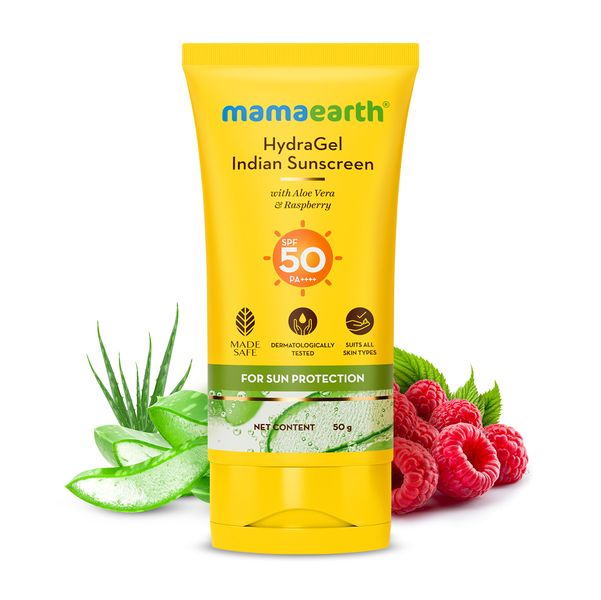
HydraGel Indian Sunscreen SPF 50: With aloe vera and raspberry, this gel-based sunscreen provides hydration and non-sticky sun protection.
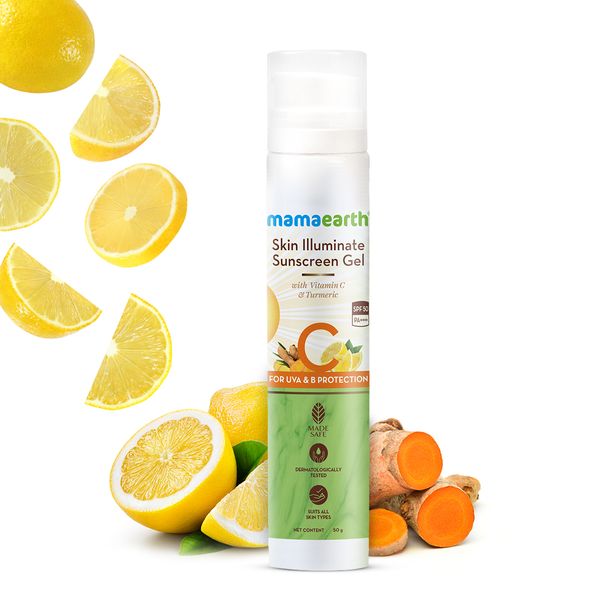
Daily Glow Sunscreen SPF 50: Infused with vitamin C and turmeric, this brightening formula offers protection and radiance in one product.
Mineral-Based Sunscreen SPF 20: A zinc oxide-powered mineral sunscreen perfect for sensitive skin, especially kids and but those prefer natural formulations.
At-A-Glance Ingredient Comparison Table
| Ingredient | Type | Protects Against | Best For | Notes |
|---|---|---|---|---|
| Zinc Oxide | Mineral | UVA + UVB | Sensitive, pigmented skin | Broadest protection |
| Titanium Dioxide | Mineral | UVB + some UVA | Sensitive, fair skin | Lower UVA coverage |
| Avobenzone | Chemical | UVA only | Lightweight feel | Needs stabilizer |
| Octocrylene | Chemical | UVB + short UVA | Water-resistant needs | Can irritate some skins types |
Sunscreen Ingredients affect Your Sun Protection
Next time you shop for SPF, don’t stop at the number- dig into the sunscreen ingredients list. Knowing what each filter does empowers you to choose the right formula for your skin type, lifestyle, and even your ethics (reef-safe, cruelty-free, etc.).
From zinc oxide and titanium dioxide sunscreen for sensitive skin to formulations with avobenzone and octocrylene for daily wear, picking the right ingredients ensures your skin stays safe, healthy, and glowing.
FAQs:
You should avoid sunscreens that contain oxybenzone, octinoxate, homosalate, and parabens. These ingredients have been linked to hormone disruption, skin irritation, and coral reef damage. So, you should look for non-toxic alternatives instead.
Avoid chemical UV filters like oxybenzone, octinoxate, and homosalate. These may penetrate the skin and cause endocrine or allergic reactions. Opt for mineral-based sunscreens containing zinc oxide or titanium dioxide.
The best sunscreens contain zinc oxide and titanium dioxide as their active ingredients. These mineral (physical) filters provide broad-spectrum protection from UVA and UVB rays without irritating the skin. Supporting ingredients like vitamin E, niacinamide, and hyaluronic acid can improve skin health.
Avoid oxybenzone, octinoxate, parabens, synthetic fragrances, and alcohols that can dry or irritate your skin. These chemicals are often found in lower-quality sunscreens and may be harmful to sensitive skin and marine ecosystems.
Effective sunscreens should include broad-spectrum mineral filters like zinc oxide and titanium dioxide. These ingredients sit on top of the skin to physically block UV rays without being absorbed into the bloodstream.
Octinoxate, homosalate, and parabens are among the most harmful sunscreen ingredients. They have been linked to allergic reactions and environmental harm. It is advisable to choose a sun protectant that contains only safe and gentle ingredients.
Harmful sunscreen ingredients include oxybenzone, octinoxate, and parabens. These substances can irritate the skin, disrupt hormones, and damage coral reefs. Look for mineral sunscreens made with zinc oxide or titanium dioxide for a safer alternative.
Related Search Terms
Increase hair density, Best Keratin Shampoo, Best oil for hair growth, Hair Fall Treatment, Control Hair Fall for Women, Increase hair growth, मुँहासे के लिए सबसे अच्छी क्रीम, चेहरे पर काले धब्बे के कारण, बालों के लिए सबसे अच्छा शैंपू कौन सा है, साबुन, लिपस्टिक, डैंड्रफ का रामबाण इलाज | difference between chemical and mineral sunscreen ,What Does SPF Mean?, 10 Common Sunscreen Myths You Need to Stop Believing (Fact vs. Fiction!), How Sunscreen Works? The Science Behind SPF Technology


