


If you’re someone who knows sunscreen is important but still finds reasons to skip it, you're not alone. Many people either use it inconsistently or avoid it altogether- not because they don’t care, but because of misinformation. We are thus creating a list of some of the most popular sunscreen myths and facts in this blog.
Whether it’s fear of breakouts, confusion about SPF numbers, or the belief that it is unnecessary indoors, these myths prevent many from building a daily sunscreen habit. We are addressing those myths clearly and simply, so you can finally make sunscreen a non-negotiable part of your skin care routine. And we’ll also show you how modern, lightweight sunscreens, like Mamaearth, have changed the game entirely.
8 Myths and Their Countering Facts
Many sunscreen misconceptions and SPF myths come from outdated beliefs and incomplete skincare advice. A common misunderstanding is that sunscreen is only necessary outdoors or on sunny days, when in fact UVA rays penetrate clouds, windows, and even indoor lighting, causing premature aging and pigmentation.
Another misconception is that darker skin tones do not need SPF, but melanin only offers limited protection and does not prevent sun damage or uneven skin tone. The truth is simple: everyone needs broad-spectrum sunscreen daily, regardless of weather, skin tone, or lifestyle, to maintain healthy, radiant, and protected skin.
Let’s see these Sunscreen Myths and Facts in detail ahead:
Myth 1: Sunscreen Is Only Necessary on Sunny Days
Fact: UV rays are always present- even on cloudy, rainy, or winter days. UVA rays, responsible for skin aging and pigmentation, penetrate through clouds and even smog. So yes, sunscreen is required 365 days a year.
Myth 2: The SPF in My Makeup Is Enough
Fact: Makeup is applied too thinly to provide adequate protection. Even if your foundation says SPF 30, it cannot replace a dedicated sunscreen layer.
Makeup SPF = Bonus. Sunscreen = Essential Base Layer
Myth 3: People with Dark Skin Don’t Need Sunscreen
Fact: Melanin provides some natural defense, but not enough to prevent:
- Hyperpigmentation
- Dark spots
- Uneven skin tone
- Skin cancer (yes, it can happen in darker skin too!)
Daily SPF helps maintain an even tone, especially if you tan easily. This is among the common sunscreen misconceptions that people have.
Myth 4: I Don’t Need Sunscreen Indoors
Fact: UVA rays pass through glass windows, meaning your skin is affected while:
- Working next to windows
- Driving
- Sitting in sunlight-filled rooms
Modern research also shows blue light from screens contributes to pigmentation- another reason indoor SPF matters.
Myth 5: You Only Need to Apply Sunscreen Once a Day
Fact: Sunscreen breaks down over time due to:
- Sweat
- Natural skin oils
- Sun exposure
To stay protected, you should reapply an SPF gel every 2-3 hours, especially when you’re outdoors.
SPF Myths: Clearing Up Formula & Ingredient Confusion
Myth 6: SPF 50 Protects Twice as Much as SPF 30
Fact: The protection difference is very small:
- SPF 30 filters ~97% UVB rays
- SPF 50 filters ~98%
What matters more is:
✔ Reapplication
✔ Choosing broad-spectrum protection
✔ Correct amount (~2 fingers rule)
Myth 7: Chemical Sunscreens Are Toxic
Fact: Modern sunscreen filters are dermatologist-tested, safe, and approved for daily use. What used to cause concerns were older formulations.
Mamaearth sunscreens, for example:
- Are MadeSafe Certified
- Avoid harmful chemicals
- Include skin-nourishing, natural ingredients
So you get protection + skincare in one.
Myth 8: Sunscreen Causes Breakouts
Fact: Old sunscreens were heavy and pore-clogging. Today’s formulas, especially gel-based and non-comedogenic ones, are specially designed for:
- Acne-prone skin
- Oily/combination skin
- Sweat-heavy climates (like India!)
If sunscreen makes you break out, you simply need a lighter formula.
SPF myths often lead people to choose the wrong protection or skip sunscreen entirely. One of the most common myths is that SPF 50 is twice as protective as SPF 30, but in reality, the difference in UVB protection is minimal- what matters most is correct application and reapplication every 2-3 hours.
Sunscreen ingredients that could be unsafe, but modern, dermatologist-approved formulas undergo strict safety testing. Gel and lightweight sunscreens also ensure non-greasy, breakout-free wear. Understanding SPF correctly empowers smarter skincare choices and consistent daily protection.
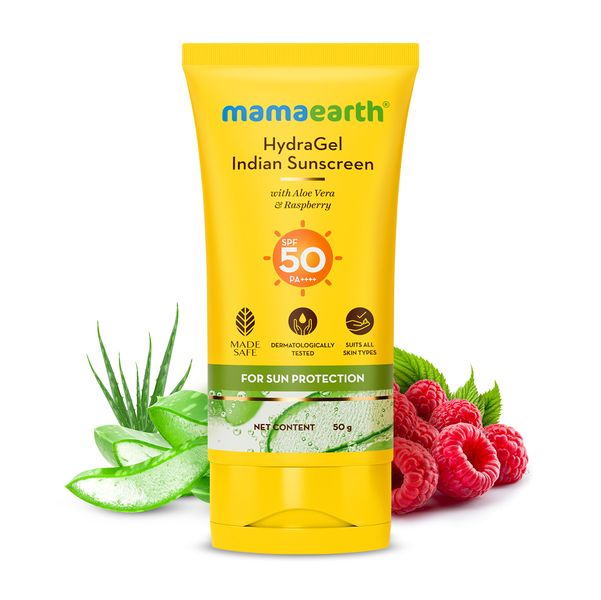

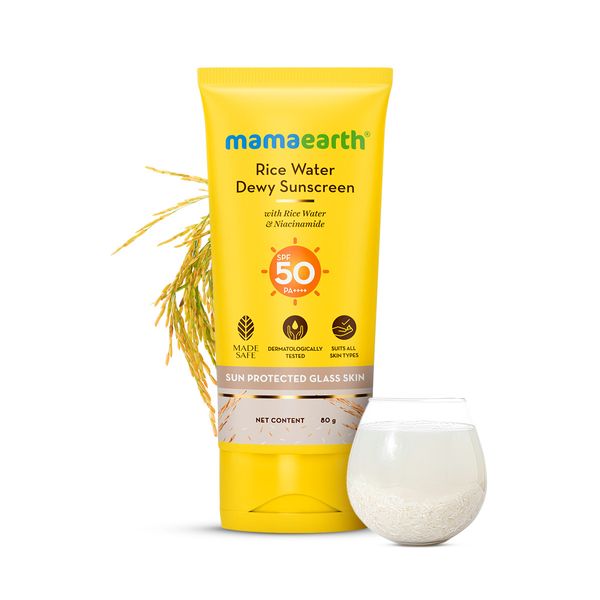
Mamaearth’s Fact-Based Sunscreen Solutions for Every Skin Type
After sunscreen myths and facts, we are discussing the best sunscreens. Mamaearth offers sunscreens made with natural, skin-loving ingredients, meaning you get suncare + skincare benefits in one lightweight application.
- Best Sunscreen for Combination Skin in India: If your T-zone is oily but cheeks get dry, choose HydraGel Indian Sunscreen:
- Ultra-light gel texture
- Non-sticky
- Perfect for humid weather
- Best Sunscreen for Dry Skin: Dry skin needs hydration + sun protection. We recommend Mamaerth’s Beetroot Hydraful Sunscreen:
- Creamy texture
- Deep hydration with Hyaluronic Acid
- Leaves skin glowing, not greasy
- Best Sunscreen for All Skin Types: If you want something universal and daily-friendly, choose Vitamin C Daily Glow Sunscreen:
- Brightens
- Evens tone
- Perfect everyday protector
Mamaearth Sunscreen Comparison Table
| Mamaearth Sunscreen | Key Ingredients | Ideal For | Texture & Finish |
|---|---|---|---|
| Vitamin C Daily Glow | Vitamin C & Turmeric | Dull, Tan-Prone Skin | Lightweight Cream, Dewy Glow |
| HydraGel Indian Sunscreen | Aloe Vera & Raspberry | Oily, Acne-Prone Skin | Ultra-Light Gel, Non-Sticky |
| Ubtan De-Tan Sunscreen | Turmeric & Saffron | All Skin Types (Tan Removal) | Soft Lotion, Even Skin Tone |
| Beetroot Hydraful Sunscreen | Beetroot & Hyaluronic Acid | Dry & Dehydrated Skin | Creamy, Hydrating, Natural Glow |
End the Myths, Start Your Essential Routine
The truth is simple: Sunscreen is your best anti-aging, anti-pigmentation, and glow-protecting step. Don’t let myths stop you. Choose a MadeSafe-certified, lightweight Mamaearth sunscreen and make SPF your everyday skincare essential. Your future skin will thank you.
FAQs
Yes. UVA rays are present year-round and penetrate windows, so daily sunscreen use is essential.
Not if you choose the right formula. Gel-based sunscreens are ideal for oily and acne-prone skin.
No. Dark skin is still vulnerable to pigmentation and sun damage.
Use the 2-finger method for face and neck.
Every 2-3 hours, especially if outdoors.
Related Search Terms
What is Biotion, Increase hair density, Best Keratin Shampoo, Best oil for hair growth, Hair Fall Treatment, Control Hair Fall for Women, Increase hair growth, मुँहासे के लिए सबसे अच्छी क्रीम, चेहरे पर काले धब्बे के कारण, बालों के लिए सबसे अच्छा शैंपू कौन सा है, साबुन, लिपस्टिक, डैंड्रफ का रामबाण इलाज | difference between chemical and mineral sunscreen ,What Does SPF Mean?


